
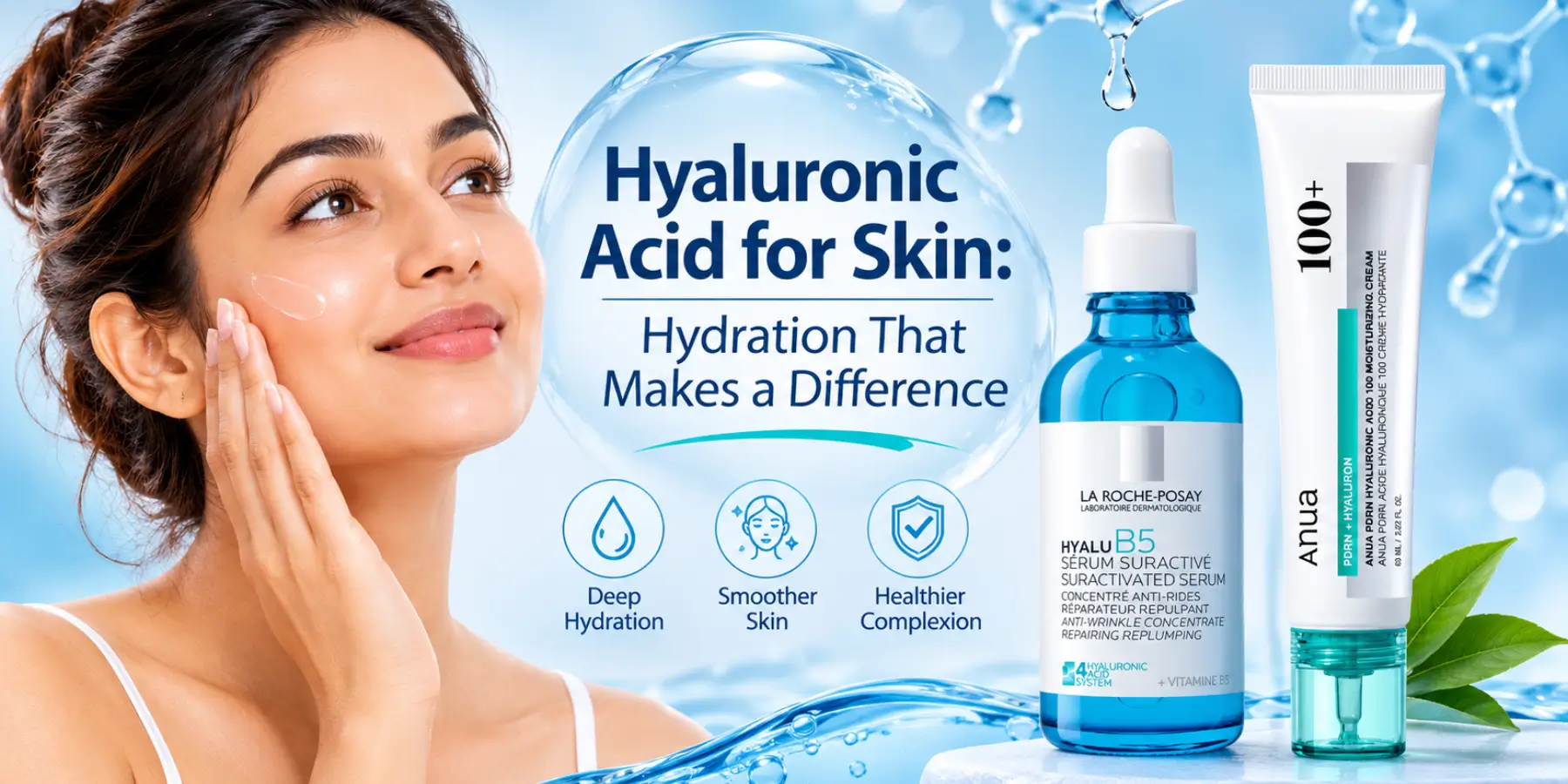
Hyaluronic Acid for Skin: Benefits and How to Use It
Keeping your skin hydrated is one of the most important steps in maintaining a healthy-looking complexion. Whether your skin feels tight after cleansing, looks dull, or shows visible fine lines, choosing the right hydrating skincare ingredients can make a noticeable difference.
One ingredient that has become a favourite in modern skincare routines is hyaluronic acid. Found in a wide range of facial serums, moisturisers and hydrating treatments, this moisture-binding ingredient helps the skin retain water and maintain a smoother, more supple appearance.
But what exactly does hyaluronic acid do? Is it suitable for every skin type? Should you apply it before or after moisturiser? And how can you incorporate it into your daily skincare routine?
In this guide, we explore the benefits of hyaluronic acid for skin, how it works, the correct way to use it and what to consider when choosing a suitable product.
What Is Hyaluronic Acid?
Hyaluronic acid (HA) is a naturally occurring substance found in the human body, particularly in the skin, connective tissues and joints. Its primary characteristic is its ability to attract and bind water, making it an important component of skin hydration.
In skincare, hyaluronic acid is classified as a humectant. Humectants are ingredients that attract and help retain moisture, supporting the skin's hydrated appearance.
You can find hyaluronic acid in several skincare formulations, including:
Facial serums
Moisturising creams and lotions
Hydrating toners
Eye creams
Facial masks
Other specialised skincare treatments
You may also encounter ingredients such as sodium hyaluronate and hydrolysed hyaluronic acid on product ingredient lists. These are related forms used in cosmetic formulations.
How Does Hyaluronic Acid Work on Skin?
Hyaluronic acid works by attracting and binding water, helping the skin maintain its moisture content.
When included in a well-formulated skincare product, it can help:
Improve the appearance of dehydrated skin.
Support a smoother and softer skin texture.
Reduce the appearance of dryness-related fine lines.
Give the skin a temporarily plumper, more hydrated appearance.
Improve overall skin comfort.
Different forms of hyaluronic acid have different molecular sizes. Larger molecules generally remain closer to the skin's surface, while smaller forms may penetrate into more superficial skin layers.
However, the effectiveness of a product depends on its complete formulation, not simply the presence or concentration of hyaluronic acid.
What Are the Main Benefits of Hyaluronic Acid for Skin?
Hyaluronic acid is particularly valued for its hydrating properties. Its benefits are relevant to people experiencing dryness, dehydration and a lack of skin smoothness.
Here are some of the main reasons it has become such a popular skincare ingredient.
1. Helps Keep Skin Hydrated
The primary benefit of hyaluronic acid is its ability to attract and bind water.
When used regularly as part of an appropriate skincare routine, it can help maintain skin hydration and reduce the uncomfortable feeling associated with dehydrated skin.
Well-hydrated skin generally looks smoother, softer and more refreshed.
2. Helps Improve the Appearance of Fine Lines
Dehydration can make fine lines appear more noticeable, particularly around the forehead, eyes and mouth.
By helping the skin retain moisture, hyaluronic acid can temporarily make these lines appear softer and the skin look fuller.
It is important to understand that this is primarily a hydration-related cosmetic effect. Topical hyaluronic acid does not permanently remove wrinkles or replace professional anti-ageing treatments.
3. Supports Softer and Smoother Skin
When the skin lacks sufficient moisture, it can feel rough, tight and uncomfortable.
Hyaluronic acid helps improve the appearance of skin texture by supporting moisture retention. This can make the skin feel softer and appear smoother.
4. Helps Improve the Appearance of Dull Skin
Dehydrated skin can sometimes look tired and lack its natural-looking freshness.
By supporting hydration, hyaluronic acid can help the complexion appear more refreshed and supple.
However, it is not a skin-lightening ingredient and should not be considered a treatment for pigmentation or dark spots.
5. Supports a Comfortable Skincare Routine
Hyaluronic acid is generally well tolerated and can complement many skincare routines.
It can be used alongside ingredients such as vitamin C, niacinamide and retinol, depending on the individual products and their application instructions.
Its moisturising properties can be particularly useful when a skincare routine includes ingredients that may contribute to dryness.
6. Suitable for Different Skin Types
Hyaluronic acid is generally suitable for a wide range of skin types.
Dry skin: Can help improve moisture levels when combined with an appropriate moisturiser.
Oily skin: Lightweight hyaluronic acid serums can provide hydration without necessarily adding a heavy or greasy feel.
Combination skin: Can help hydrate areas that feel dry without requiring a rich cream over the entire face.
Sensitive skin: Often well tolerated, although the complete product formulation should be checked for potential irritants.
Mature skin: Can help improve hydration and temporarily soften the appearance of dehydration-related fine lines.
The best formulation depends on your individual skin needs and preferences.
Dry Skin vs Dehydrated Skin: Does Hyaluronic Acid Help Both?
Although the terms are sometimes used interchangeably, dry skin and dehydrated skin are not exactly the same.
Understanding the difference can help you choose more suitable skincare products.
Dry Skin
Dry skin is generally a skin type associated with insufficient natural oils (sebum). It may feel rough, tight or flaky and can be more prone to irritation.
People with dry skin often benefit from moisturisers containing ingredients that help attract moisture and reduce water loss.
Hyaluronic acid can be a useful part of this routine, but it should be combined with moisturising ingredients that help support the skin's protective barrier.
Dehydrated Skin
Dehydrated skin refers to skin that lacks sufficient water. Unlike dry skin, dehydration can affect people with oily, combination or normal skin types too.
Common signs may include:
A tight or uncomfortable feeling.
Dull-looking skin.
More noticeable fine lines.
Rough or less supple skin.
A temporary loss of a plump appearance.
Hyaluronic acid can be particularly useful for supporting hydration in this situation.
If your primary concern is dryness or dehydration, explore our Dry & Dehydrated Skin Care Collection to discover relevant skincare options.
How to Use Hyaluronic Acid Correctly
Using hyaluronic acid correctly is important to get the best possible results from your skincare routine.
Although the application process is relatively simple, the order in which you apply your products matters.
Step 1: Cleanse Your Face
Start with a gentle facial cleanser to remove accumulated dirt, excess oil, sunscreen and other impurities.
Avoid using an excessively harsh cleanser that leaves your skin feeling tight or stripped.
Step 2: Apply Hyaluronic Acid to Slightly Damp Skin
After cleansing, gently pat your face with a clean towel, leaving the skin slightly damp rather than completely dry.
Apply a few drops of hyaluronic acid serum according to the product instructions.
Spread it gently across your face and neck, avoiding direct contact with your eyes unless the product is specifically formulated for that area.
Applying it to slightly damp skin helps provide water for the humectant to bind.
Step 3: Follow with a Moisturiser
This is an important step.
After applying your hyaluronic acid serum, follow with a suitable moisturiser. Moisturisers containing ingredients that help reduce water loss can help maintain the hydration achieved by your skincare routine.
Depending on your skin type, you may prefer:
A lightweight gel moisturiser for oily skin.
A lotion for normal or combination skin.
A richer cream for dry skin.
Step 4: Apply Sunscreen During the Day
If you are using hyaluronic acid in your morning routine, finish with a broad-spectrum sunscreen with SPF 30 or higher.
Sunscreen is essential for protecting your skin against harmful ultraviolet radiation and should remain a regular part of your daytime skincare routine.
Can You Use Hyaluronic Acid Every Day?
Yes. Most topical hyaluronic acid products are designed for regular use and can generally be incorporated into both morning and evening skincare routines.
However, always follow the manufacturer's instructions and pay attention to how your skin responds.
Using more serum than recommended does not necessarily provide additional benefits.
Morning and Evening Hyaluronic Acid Skincare Routine
Hyaluronic acid is a versatile ingredient that can be incorporated into different skincare routines.
Here is a simple example.
Morning Routine
Gentle facial cleanser.
Hyaluronic acid serum.
Suitable moisturiser.
Broad-spectrum sunscreen SPF 30 or higher.
Evening Routine
Gentle facial cleanser.
Hyaluronic acid serum.
Moisturising cream or lotion.
If you use additional treatments such as retinol or exfoliating acids, follow their specific application instructions and introduce them gradually if you are not accustomed to using them.
You do not need an elaborate skincare routine to benefit from hyaluronic acid. Consistency and choosing suitable formulations are more important than using too many products.
Can You Use Hyaluronic Acid with Other Skincare Ingredients?
One advantage of hyaluronic acid is that it can complement several commonly used skincare ingredients.
However, the best way to combine products depends on their formulation, concentration and your skin's tolerance.
Hyaluronic Acid and Vitamin C
Vitamin C is commonly used in skincare routines to help improve the appearance of uneven skin tone and provide antioxidant benefits.
Hyaluronic acid and vitamin C can be used together. Some products also combine both ingredients in a single formulation.
For example, COSRX The Vitamin C 23 with Hyaluronic Acid Serum 20ml combines vitamin C with hyaluronic acid.
Because this product contains a high concentration of vitamin C, people who are new to vitamin C or have sensitive skin should pay attention to the product instructions and introduce it cautiously.
Hyaluronic Acid and Niacinamide
Niacinamide (vitamin B3) is another popular skincare ingredient.
It is commonly used to support the skin barrier, improve the appearance of uneven skin tone and manage excess oil.
Hyaluronic acid can complement niacinamide by supporting skin hydration.
These ingredients can be used in the same skincare routine, provided the products are suitable for your skin.
Hyaluronic Acid and Retinol
Retinol is a vitamin A derivative commonly used in skincare products targeting signs of ageing and uneven skin texture.
Some people experience dryness, irritation or peeling when introducing retinol.
A hydrating product containing hyaluronic acid can complement a moisturising routine and help reduce the feeling of dryness.
However, hyaluronic acid does not eliminate the potential irritation associated with retinol. Introduce retinol gradually and use sunscreen during the day.
Common Mistakes to Avoid When Using Hyaluronic Acid
Even a good skincare ingredient may not deliver the expected experience if it is used incorrectly.
Here are some common mistakes to avoid.
1. Applying Serum to Completely Dry Skin
Applying hyaluronic acid to slightly damp skin is generally recommended because water is needed for its moisture-binding function.
2. Skipping Moisturiser
A hydrating serum and a moisturiser serve different purposes.
Using a moisturiser after your serum helps maintain skin hydration and reduces moisture loss.
3. Using Too Much Product
Applying excessive amounts does not guarantee better hydration. Follow the recommended quantity on the packaging.
4. Expecting Immediate Anti-Ageing Results
Hyaluronic acid can temporarily improve the appearance of fine lines caused by dehydration. It should not be expected to permanently eliminate wrinkles, lift sagging skin or reverse the natural ageing process.
5. Choosing a Product Without Considering Your Skin Type
A lightweight serum may suit oily skin, while a richer moisturising cream may be more appropriate for someone experiencing persistent dryness.
Consider the complete formulation rather than choosing a product based only on its hyaluronic acid concentration.
How to Choose the Right Hyaluronic Acid Product at Watsans.lk
Hyaluronic acid is available in different skincare formulations. Choosing the right one depends on your skin type, preferences and existing skincare routine.
Hyaluronic Acid Serums
Serums are lightweight skincare products that can deliver hydrating ingredients in concentrated formulations.
They are particularly useful for people who want to add an additional hydration step to their routine.
Some options available at Watsans.lk include:
Hyaluronic Acid Moisturisers
If you prefer a product that combines hydration with moisturising benefits, a cream or lotion containing hyaluronic acid may be a convenient option.
Examples include:
These products offer alternatives for people who prefer cream-based hydration rather than using a separate serum and moisturiser.
When comparing products, consider the complete ingredient list, texture, skin compatibility and manufacturer's usage instructions.
Is Hyaluronic Acid Suitable for Skincare in Sri Lanka?
Sri Lanka's warm and humid climate can influence how different skincare products feel on the skin.
Some people prefer lightweight formulations during warmer conditions, while others may experience dryness when spending extended periods in air-conditioned environments.
Hyaluronic acid can be incorporated into skincare routines throughout the year.
A few practical considerations:
Choose lightweight, non-greasy formulations if you dislike heavy products.
Use a suitable moisturiser even when your skin feels oily.
Avoid excessive cleansing, which can leave skin feeling dry.
Maintain regular sun protection during daytime activities.
Adjust your moisturiser according to your skin's changing needs.
Remember that humidity alone does not determine your skin's hydration levels. Your skin type, skincare habits and environmental exposure also matter.
Are There Any Side Effects of Hyaluronic Acid?
Topical hyaluronic acid is generally considered well tolerated and is suitable for many skin types.
However, individual reactions can vary depending on the complete product formulation.
Some people may experience irritation, redness or sensitivity from other ingredients included in the product.
If you have sensitive skin:
Check the complete ingredient list before purchasing.
Introduce new products gradually.
Consider patch testing according to the product's instructions.
Discontinue use if irritation develops.
If you experience persistent irritation, swelling or an allergic reaction, seek appropriate medical advice.
People with ongoing skin conditions or severe dryness should consult a dermatologist for personalised guidance.
Final Thoughts: Is Hyaluronic Acid Worth Adding to Your Skincare Routine?
Hyaluronic acid is a useful skincare ingredient for people who want to improve skin hydration and maintain a smoother, softer and more supple-looking complexion.
Its ability to attract and bind water makes it suitable for many skincare routines, including those designed for dry, dehydrated, oily and combination skin.
For the best experience, apply your hyaluronic acid product according to its instructions, preferably on slightly damp skin, follow with a suitable moisturiser and maintain regular sun protection.
The key is not simply choosing a product with hyaluronic acid, but selecting a formulation that works well with your skin type and overall skincare routine.
At Watsans.lk, you can explore a range of hydrating skincare products from recognised international brands and find options that suit your individual skincare needs.
Explore the Dry & Dehydrated Skin Care Collection at Watsans.lk and discover suitable products for your daily skincare routine.
Frequently Asked Questions About Hyaluronic Acid
1. What are the main benefits of hyaluronic acid for skin?
Hyaluronic acid helps attract and retain water, supporting skin hydration. It can improve the appearance of dryness, make skin look smoother and temporarily soften the appearance of fine lines associated with dehydration.
2. Can I use hyaluronic acid every day?
Yes. Most topical hyaluronic acid products can be used daily, often in both morning and evening routines. Follow the product instructions and adjust usage if your skin develops irritation.
3. Should I apply hyaluronic acid to wet or dry skin?
It is generally recommended to apply hyaluronic acid serum to slightly damp skin rather than completely dry skin. Follow it with a suitable moisturiser to help maintain hydration.
4. Should I use moisturiser after hyaluronic acid serum?
Yes. Applying moisturiser after your hyaluronic acid serum helps reduce moisture loss and supports skin hydration. Choose a moisturiser appropriate for your skin type.
5. Can I use hyaluronic acid with vitamin C?
Yes. Hyaluronic acid and vitamin C can be used together. Some skincare formulations combine both ingredients. However, introduce high-strength vitamin C products carefully if you have sensitive skin.
6. Can hyaluronic acid help with wrinkles?
Hyaluronic acid can improve skin hydration and temporarily soften the appearance of fine lines associated with dehydration. It does not permanently remove wrinkles or replace professional anti-ageing treatments.
7. Is hyaluronic acid suitable for oily skin?
Yes. Lightweight hyaluronic acid serums can provide hydration without necessarily making the skin feel greasy. Choose a formulation that suits your skin type.
8. Is hyaluronic acid good for dry skin?
Yes. It can help attract and retain moisture, making it a useful ingredient in routines for dry skin. However, people with dry skin should also use a suitable moisturiser containing ingredients that help reduce water loss.
9. Can I use hyaluronic acid with retinol?
Yes. Hyaluronic acid can complement a retinol routine by supporting hydration. However, it does not prevent all retinol-related irritation. Introduce retinol gradually and follow the product instructions.
10. How long does hyaluronic acid take to show results?
Some people notice an improvement in skin softness and hydration shortly after application. Longer-term results depend on the product formulation, frequency of use and overall skincare routine.
11. Is hyaluronic acid suitable for sensitive skin?
It is generally well tolerated, but sensitivity can depend on the complete formulation. Check the ingredient list and introduce new products gradually.
12. Can I use hyaluronic acid in hot and humid weather?
Yes. Hyaluronic acid can be used throughout the year, including in hot and humid climates. Choose a suitable formulation and follow it with a moisturiser appropriate for your skin.